

Webzine
[Cover Story “Death” #1]Toward a Better Death in Our Lives — The Path Traveled by the “Brilliant Will”| 기간 | 1월 |
|---|
[Cover Story “Death” #1]
Toward a Better Death in Our Lives
— The Path Traveled by the “Brilliant Will”
— Research Collective for the Elimination of Discrimination Based on Diverse Family Forms and the Guarantee of the Right to Form a Family (hereafter, the Family Rights Research Collective)
This article is based on the piece “The ‘Extraordinary’ Future Planning of ‘Abnormal’ Families: The Brilliant Will,” published in September 2011 in the Family Rights Activity Archive (2006–2011) by the Family Rights Research Collective, with additional content reflecting developments up to the present.
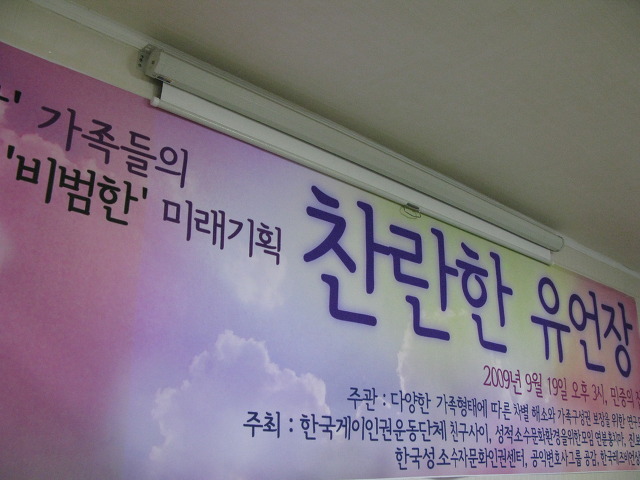
(Photo courtesy of the Family Rights Research Collective)
1. Beginning
The origins of the Family Rights Research Collective’s project “The ‘Extraordinary’ Future Planning of ‘Abnormal’ Families: The Brilliant Will” (hereafter, “The Brilliant Will”) date back to 2008. In the fall of that year, public attention in South Korea converged on the death of actress Choi Jin-sil, followed by widespread media coverage of her former husband Jo Sung-min’s attempt to regain parental rights, as well as disputes over the inheritance she left behind. Because she was a famous actress believed to have possessed substantial assets, issues such as parental authority, guardianship, wills, and inheritance—areas governed by kinship and inheritance law—suddenly became subjects of unprecedented public discussion and concern.
Meanwhile, the day after Choi Jin-sil’s death, a lecture was held at a university in Seoul by Alma Soongi Beck, a Korean-American LGBTQ+ attorney who had been active in the movement to institutionalize same-sex marriage in California. Several members of the Collective attended the lecture and were particularly struck by Beck’s brief mention of a program that supported same-sex couples in writing wills.
Around that time, the Family Rights Research Collective had just completed the publication of Basic Reference Materials for Establishing Alternative Family Systems and was searching for directions beyond research-centered activities. As they examined the problems in kinship and inheritance systems brought into sharp relief by Choi Jin-sil’s death, a question arose: had she left a will, might some of these conflicts have been mitigated? Recalling Beck’s account of how will-writing had been used in the U.S. same-sex marriage movement to articulate the need for marriage or legal partnership, the Collective began to agree that they, too, could launch a public initiative using wills as a central keyword. As this idea took shape, the Family Rights Research Collective’s “Brilliant Will” program was born.
2. Intentions of the Project
Through “The Brilliant Will,” the Family Rights Research Collective sought to achieve four main objectives.
First, the project aimed to reveal how existing kinship and inheritance systems—still grounded in the framework of the so-called “normal family”—operate in discriminatory ways against families that do not conform to that model and fail to reflect the realities of changing family forms. It is generally understood that when someone dies, inheritance follows, and if minor children are involved, questions of parental authority or guardianship inevitably arise. Yet under current systems, people who live in family forms that differ from the heterosexual, blood-based, legally married “normal family” face discrimination at the very moment of death—a moment that is profoundly decisive for both the individual and those connected to them. These institutional designs also translate, in practice, into the exclusion of people who are left unable to mourn fully. Through this program, the Collective sought to expose kinship and inheritance systems as symbolic and material mechanisms that sustain the “normality” of heterosexual, legally married, blood-based families and uphold the norms of heteronormative nuclear-family ideology.
Second, the Collective aimed to directly encounter and document the diverse forms of discrimination produced by the current family system, as well as the lived realities of diverse families, through the process of writing wills. As participants shared personal experiences in shaping the content of their wills, they examined where discrimination occurred, explored how wills might serve as responses, and considered what kinds of changes or alternatives would be necessary in cases where wills alone were insufficient.
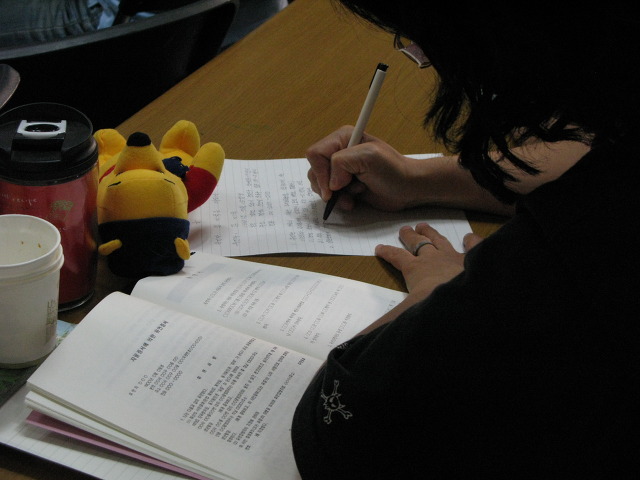
(Photo courtesy of the Family Rights Research Collective)
Third, the project sought to identify what kinds of needs and desires people hold regarding alternative family systems, and to communicate why such systems must be created. Because wills are deeply intertwined with kinship and inheritance structures, the Collective wanted to understand who was drawn to will-writing programs, how acutely they perceived existing problems, and, through that process, to make a broader public case for the necessity of family systems that move beyond current limitations.
Finally, particular emphasis was placed on helping people in diverse family forms acquire what the Collective termed “post-death autonomy.” By enabling individuals to reclaim agency through wills in the face of discrimination and exclusion, the project aimed to foster self-empowerment. Under existing systems, when members of family communities deemed “non-normal” face sudden death without preparation, they often leave behind not security for their most cherished partners or families, but conflict and dispute. In this sense, a will becomes a means by which families of diverse forms—excluded simply for not being blood relatives—can, on their own terms and outside institutional boundaries, organize their lives and deaths, articulate the meaning of their lives, and honor their most valued relationships.
A will can function as a basic safeguard, allowing individuals to determine the disposition of their property and the procedures surrounding their funeral, so that the values they upheld in life are not distorted after death. Moreover, the act of writing a will can itself become a moment of reflection and, for anyone, a meaningful turning point in life. Yet although many people vaguely recognize the need for a will, most do not know how to make one legally valid or what it should contain. Few have considered concretely what happens after death, or what a will can actually accomplish. For this reason, a key goal of the project was to carefully walk through the realities that follow death—inheritance, funerals, effects on children or loved ones—and to help participants address at least some post-death challenges by writing legally valid wills.
In sum, “The Brilliant Will” was conceived as a starting point for exposing the discrimination faced by diverse families under inheritance systems and social practices surrounding death that are rooted in narrow family ideology, while also promoting will-writing as a way for all people—not only those in marginalized family forms—to imbue their lives and deaths with deeper meaning. Beyond spreading a culture of will-writing, the ultimate goal was to challenge the many forms of discrimination that diverse families encounter in contemporary Korean society under heteronormative familism, and to secure the right to family formation.
3. Preparing and Running the Program
To realize these goals, the Family Rights Research Collective first undertook a thorough review of existing inheritance and kinship systems, the meaning and legal force of wills, and the requirements for making a will legally valid. Based on this research, the Collective produced a handbook. The publication consisted of: an opening essay on the necessity of “preparing for death” (written by Injeong); an essay examining the meaning of wills (by Lee Jong-geol); a critique of the current inheritance system (by Ryu Im-ryang); a guide to writing and using wills (by Jang Seo-yeon); sample wills (written by Garam, with legal review by attorney Lee Kyung-hwan); and an appendix explaining kinship and inheritance systems (by Park Hye-rim). The volume was completed with careful, accessible editing by Kim Won-jeong.
The handbook was designed so that even those who did not attend the program could understand inheritance systems and learn both what to include in a will and how to write one. In particular, it sought to include forms of testamentary content that would be especially useful for family members living outside conventional family systems. The response to the handbook was strong, and a second printing was issued within just a few months.
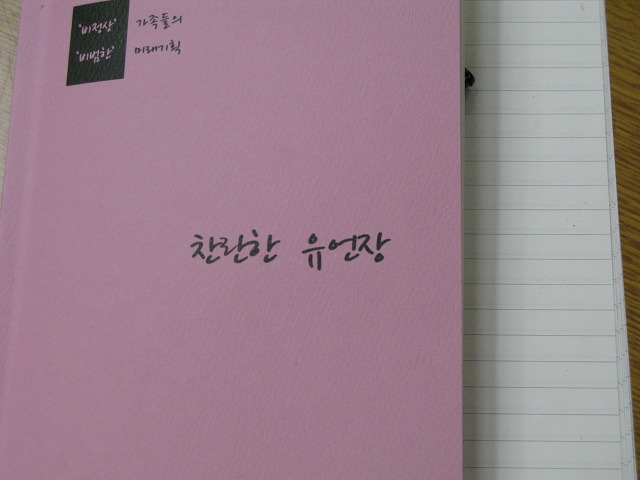
(Photo courtesy of the Family Rights Research Collective)
The program itself consisted of five main parts:
1. an opening session;
2. an explanation of the meaning and legal force of wills;
3. guidance on how to write a will through sample cases;
4. time for participants to write their own wills; and
5. a session for sharing and discussing participants’ wills, selected provisions, and reflections.
The Collective placed particular importance on the opening session, as the event was not intended to be merely about writing wills, but about reflecting together on the meaning of one’s life and death and expressing that meaning through a will. A dedicated sharing session was also essential, allowing participants to see how wills written by people in diverse family forms differed from conventional wills focused primarily on asset distribution. In practice, a wide range of wills were presented, and listening to others often prompted participants to immediately add elements they had previously overlooked.
After long preparation, the first event was held on September 19, 2009, at the People’s House in Mapo, Seoul. It was designed as an open, public program. For the opening, the improvisational theater group Thursday, 1 p.m. was invited to listen to participants’ experiences with death and their thoughts about what comes after, and to transform these stories into improvised performances. This created a space to reflect collectively on death and what follows. The program then moved into lectures and will-writing sessions. Around fifty participants attended, including LGBTQ+ people, unmarried individuals, and single mothers by choice, generating a wealth of stories and questions.
Subsequently, the program adopted an outreach model, visiting groups and tailoring sessions to each community’s specific context. The Brilliant Will program was held as follows:
1. Sept. 19, 2009 — First event
2. Feb. 19, 2010 — Geoje Women’s Association
3. Mar. 6, 2010 — Korea Lesbian Counseling Center
4. May 28, 2010 — Eonni Network
5. June 8, 2010 — Chingusai (Korean Gay Human Rights Group)
6. July 10, 2010 — Disabled Women’s Solidarity
7. Oct. 6, 2010 — Ewha Lesbian Human Rights Group Pervert Girls Flying in the Sky
8. Apr. 22, 2012 — Brilliant Will for Unmarried and Queer People
9. Feb. 7, 2013 — Queer Family Legal Counseling: Stories and Battles
( (focused on cohabitation, medical decision-making, and wills;
5th LGBT Human Rights Forum, “Please Calm Down First!”)
10. 2013–2016 — Chingusai (once annually, four sessions total)
11. Nov. 21, 2015 — Dignified Death and Writing a Will
( (Korean Network of People Living with HIV/AIDS, KNP+)
12. Mar. 6, 2016 — A Guide for Same-Sex Couples Who Want to Live with Peace of Mind
( (The three-part set for same-sex couples: advance medical directives, guardianship contracts, and wills;
8th LGBTI Human Rights Forum, “Even Dirtier Connections”)
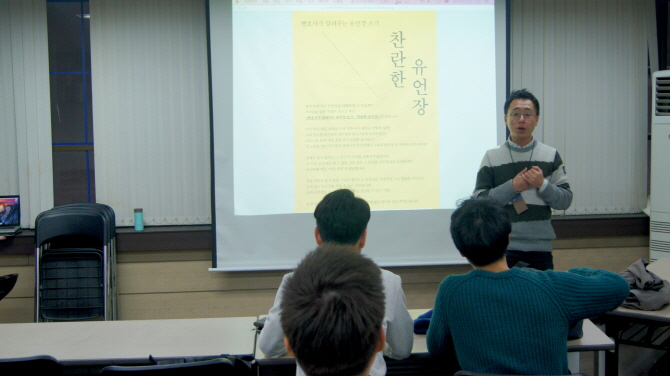
(2015 “Brilliant Will” session for Chingusai members)
Across fifteen sessions, participants proposed many creative and striking wills. Some asked that their inheritance be used to produce feminist films. Others explicitly requested that no spirit-marriage rituals be performed, or specified that their memorial portrait should be the photograph in which they looked most beautiful. Many carefully detailed protections for same-sex partners, children, aging parents, and companion animals. Some asked that their funeral be replaced with a trip taken by friends using their estate, or that it become a joyful party with music. Particularly moving were requests ensuring that colleagues—who, as minorities, functioned as family beyond blood ties—would be able to mourn fully, and appeals asking that beloved LGBTQ+ friends not be made to feel diminished at the funeral. Many wills expressed criticism of family systems and social discrimination while articulating hopes for change. A notable number included bequests to feminist organizations or human-rights groups. With different participants gathering in different atmospheres at each session, diverse narratives and wills circulated, giving the program its dynamic character.
During the 5th LGBT Human Rights Forum in 2013 and the 8th LGBTI Human Rights Forum in 2016, the program also created spaces to reflect on issues surrounding cohabitation, housing, property, and medical decision-making within LGBTQ+ relationships, based on real stories. These sessions explored not only wills but also other legal tools available within current frameworks—such as advance medical directives and guardianship contracts—as forms of self-help to secure post-death autonomy.
4. Evaluation and Future Plans
Following the Brilliant Will program, some critiques emerged. These included assessments that complex legal issues were not explained sufficiently or clearly enough, and that the project did not go far enough in politicizing the issue or developing new discourses. Others noted that the focus on same-sex couples limited the scope, suggesting the need to expand content and outreach to include single-parent families, grandparent-led households, transnational marriage families, and divorced families. Attempts were made to broaden the program, but efforts to develop sessions for immigrant women through marriage were ultimately unsuccessful due to difficulties in mobilizing participation. There were also reflections that, by focusing heavily on discrimination, the program did not sufficiently highlight the positive, future-oriented vision of diverse families and their alternative possibilities. Limitations in time and participant numbers were also noted as points of regret.
Nevertheless, the program was widely praised for raising awareness of post-death autonomy and for providing concrete opportunities for people to think actively and proactively about what comes after death. Participants expressed surprise at discovering issues they had never previously considered, found reassurance in the knowledge that rights could be exercised even after death through a will, and openly criticized the irrationality of existing kinship and inheritance systems. The program was also positively evaluated for its coherence and completeness.
Although the Family Rights Research Collective lacks the capacity to continue running the program indefinitely, it hopes to carry it forward whenever possible, and to make the program available to other organizations, offering support so that different groups can host the program independently. The initial goal—“modestly,” thirty sessions and five hundred participants—was not fully realized, but the Collective continues to view the program as one with great potential and lasting value. In a reality saturated with discrimination and exclusion, the meaning of this program and the impact it can generate are not easily diminished.
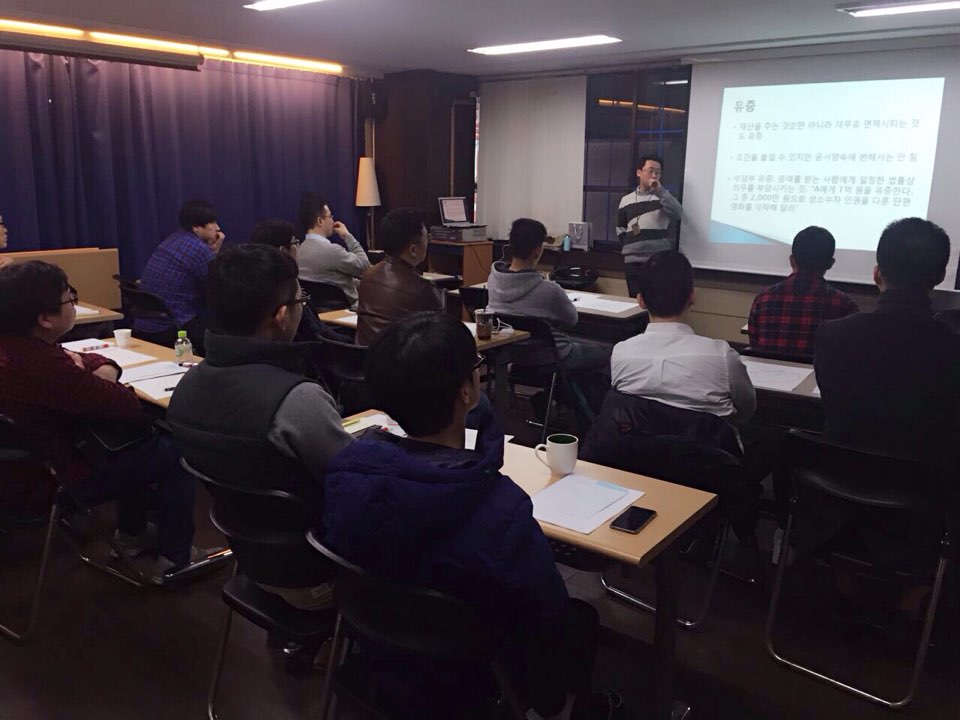
(2016 Chingusai “Brilliant Will” event)
5. Afterword
Because “The Brilliant Will” was a program that unfolded over many sessions and dealt directly with death, it left the members of the Family Rights Research Collective with many memories and complex emotions.
During preparations for the first session, Injeong remarked, “While preparing this event, I found myself thinking a lot about the deaths of minorities such as women and homosexuals, and personally wondering, ‘If I were to die tomorrow, shouldn’t I at least plant an apple tree?’” Drawing on this comment, during an improvisational rehearsal by Thursday, 1 p.m., an actor playing a preacher delivered a satirical sermon declaring, “People and apple trees cannot love each other! They must not love!”—a moment that left the Collective laughing for years afterward. At another session held with members of the Korea Lesbian Counseling Center, Tari attempted to open with a discussion following a screening of a short film depicting an elderly lesbian in 1960s America from the movie The Wall 2, but instead burst into prolonged tears, leaving everyone deeply moved. Participants cried together as they reflected on loss, and also laughed freely, insisting, “My funeral must absolutely be a party!”—affirming that life itself should be a celebration.
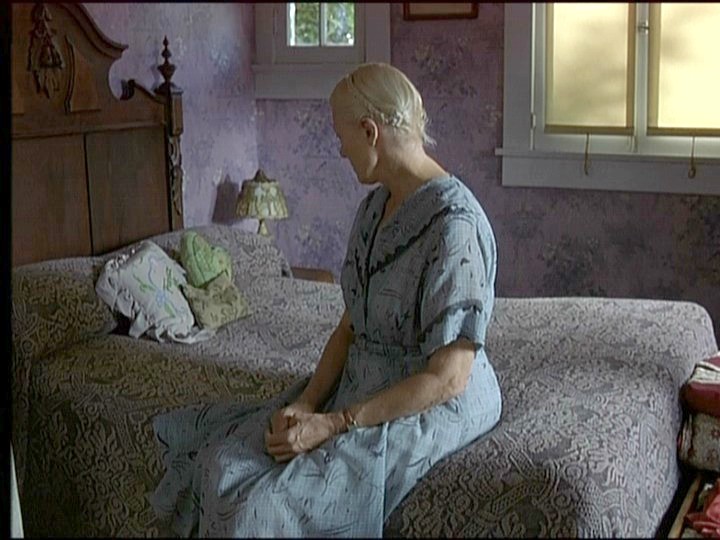
(Image source: hotflick.net, still from the film “The Wall 2”)
In retrospect, running this program sometimes felt like gathering the people closest to the deceased at a funeral—people who seem especially sorrowful, yet also especially determined to smile. The deaths and wills we encountered were, in truth, each person’s own death and will. Building on these experiences, the Family Rights Research Collective believes it can continue to design alternative family systems and speak out to the world by capturing the realities, lived experiences, and emotions of everyday life. In that sense, this program—true to its title—was brilliant.
(Family Rights Research Collective)