

Webzine
[No.174][Activity Report #2] Is the Square Powerless?| 기간 | 1월 |
|---|
[Activity Report #2]
Is the Square Powerless?
Is the square powerless?
1.
It is devastating. Ever since December began, I have been muttering that to myself all day long. A Jeju Air (Aekyung Group) passenger plane, Flight 7C2216, exploded and 179 people died. In the face of the bereaved families’ enormous grief, I feel almost ashamed to voice my own sorrow, but I cannot hide this hopelessness. May the deceased rest in peace. It feels as if my life and the lives of my neighbors have been thrown into a gigantic dice game: if you’re lucky, if you’re not. If you’re not.
A state of martial law—something I had only ever read about in history books—was declared, and soldiers pointed their guns at civilians. Citizens who ran to the National Assembly in the middle of the night with nothing but their bodies, and Assembly workers who locked arms in a scrum and faced down the soldiers, managed to prevent the occupation of the legislature. That night, inside and outside the National Assembly, there were lesbians, gays, trans people, and bi friends whom I love. When the motion to lift martial law passed, I ran toward the Assembly with a worried heart.
As an activist, it was hard to judge what to do. Martial law had been declared, and the military and police were moving. I recognized immediately that this was a self-coup and an insurrectionary crime, but more than anything, I couldn’t believe it. I wasn’t sure whether I should call for immediate civic resistance, or whether I should prioritize the safety of LGBTQ+ community members—people who could be overwhelmed by fear, isolated, and made even more vulnerable under martial law. Because the partner beside me was visibly panicked and tense, I decided first to run with them to the Chingusai office and send messages to members of the organization who were likely feeling the same way.
To be honest, I got angry when people around me said, “Don’t get shaken—let’s watch how things unfold.” From the proclamation banning political activity, it was already possible to infer that the purpose was to arrest lawmakers, and it was pretty clear this was a situation where every second mattered. But I also couldn’t irresponsibly tell people, “Risk your life and go resist right now.” That could end up stoking fear. Still—was waiting quietly until the National Assembly voted to lift martial law really all I could do? I couldn’t believe my own helplessness in the face of martial law either.
By the time I arrived at the National Assembly, the soldiers were already leaving. The main gate was still blocked by police, and I saw queer friends who had arrived earlier. They didn’t look injured—just cold. Only after receiving a message from my gay friend, an aide who had been inside the Assembly, saying he was safe, did my tension finally release. When I met him a few days later, he said that while they were locking arms and blocking the soldiers from entering, he actually felt good because the male aide next to him was handsome. It was a miserable joke, with a miserable face—something you can only say because you survived. After putting him in a taxi and sending him home once he’d collapsed from drinking, I cried for a long time at the bottom of the bar’s stairs.
When I ran to the National Assembly, I don’t know why, but I grabbed the Chingusai flag. There’s a flag covered with congratulatory messages people wrote at Chingusai’s 30th anniversary ceremony in August. Thinking back, I guess I wanted to stay connected to people—even if only like that. I needed courage, and that piece of cloth comforted me.
2.
Thirty minutes after martial law was declared, my dad called. His voice shook like someone gripped by trauma. It was the first time in my life I’d heard my father’s voice trembling with fear—and the only thing he said was: don’t leave the house. My dad used to be a communist—someone who believed in revolution. Now, I think he holds a small local post within the Democratic Party of Korea. He was elected twice as an independent city council member, and now he runs a beekeeping business and is very interested in local ecological politics. My dad never tried to step down from the role of “the intellectual,” and because of that, I never once felt we were communicating emotionally. But this time, even though it was only a phone call, I could tell so clearly—so vividly—that his hands must have been shaking too.
I was grateful he called, but that night I wished my dad had said, “Let’s go to the National Assembly together.” In fact, my partner’s mother told them to be ready in case they needed to run to the Assembly depending on how things unfolded. Maybe, in truth, I also wanted my colleagues to be the first to say, “Let’s go together.” That night I wasn’t scared—but I felt helpless enough to die. Helpless. An insurrection nearly crushed constitutional order and everyone’s rights in one stroke, and even the impeachment motion barely passed. We can’t even be sure the Constitutional Court can deliver an impeachment ruling. For an entire month, they failed to arrest the ringleader of the insurrection. Even now, the perpetrators still hold power and exercise authority as if nothing happened. As the insurrection drags on, the helplessness keeps me from sleeping.
This helplessness taught me something: it’s not that democracy fell into crisis because of martial law—we have been living all along in a democracy of permanent emergency. We think we haven’t lost face as sovereign citizens because we have the right to vote, but in reality, those who decide our “representatives” are the people who hold nomination power in major parties. In the last local elections, 494 candidates were elected uncontested. Citizens have almost no means of checking politicians who tightly control party power within the two dominant parties. And we were living in an absurdly authoritarian society where one president can veto, without limit, matters decided by 192 lawmakers.
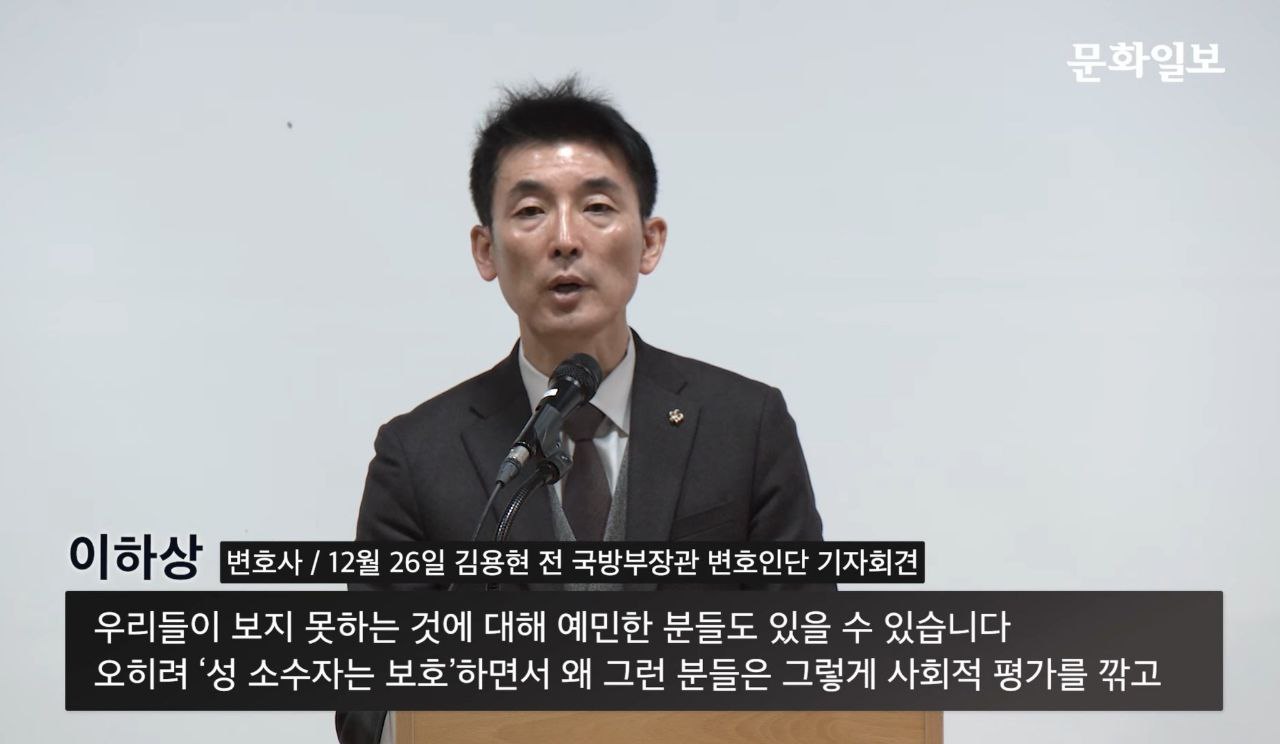
There’s no real disagreement that bringing another authoritarian figure of a different temperament—Lee Jae-myung—to power would help address the immediate crisis. But the core background that produced this crisis remains: the threat that politics of hatred—politics that targets and tramples human rights—will grow powerful again. Disbanding the People Power Party for insurrection is important, but if, under that pretext, they once again antagonize and erase minorities the way they did under Moon Jae-in, then democracy will still be powerless. The lawyer for Kim Yong-hyun, former defense minister and a key figure in the insurrection, argued that while “sexual minorities are protected,” harming the honor of the insurrection forces is “character assassination.” Even just watching those who, in their last struggle, stoke anti-LGBTQ+ hatred makes it quite clear that hateful politics sits at the heart of this situation—yet the political establishment refuses to address it.
Since the illegal declaration of martial law, the streets and squares have opened almost every day—and one more thing keeps provoking my helplessness: the worldview expressed by a not-insignificant number of men in their 20s and 30s. They support the president’s impeachment and oppose illegal martial law, yet they don’t come out to the square. When I listen to the men around me in that age group, what they mostly say is, “It doesn’t feel like my issue.” Someone told me that on the day martial law was declared, he laughed while watching Bitcoin or stock fluctuations, or that he barely cared, thinking it would somehow work out. I once read a paper suggesting that among men, those who believe their socioeconomic status has fallen relative to their parents’ generation are more likely to be hostile toward women. It seems fairly certain that, for many of them, socioeconomic comparison weighs far more heavily in their worldview than any sense of political efficacy.
It’s widely said that young men tend to be more hostile and aggressive toward minorities, but in my view, men’s enemy is men. Of course, men are not a monolith. You either struggle to survive within hierarchies inside masculinity—or you become a “loser creep.” You can’t be an otaku, you can’t be fat, you can’t be someone who doesn’t have sex, and you can’t be gay. I want other men to stop pretending to be nice and be honest about their desire to secure socioeconomic status. That is, in a word, “cold capitalism.” If that’s their core worldview, then I can understand why so many of them foam at the mouth as they say they hate “femi-bitches.” Even within male society, relationships are hostile and competitive; anyone who criticizes their masculinity is nothing but an annoying obstacle—or a target of rage.
Throughout December, helplessness washed over me: how do we live together with people who cannot understand anyone with a different worldview, who feel not even a sliver of empathy for community, solidarity, or the value of connection? Are we once again supposed to overcome this social crisis by leaning on an authoritarian politician like Lee Jae-myung? Even when society faces a crisis severe enough to threaten collapse, how can any kind of social dialogue be possible with people who seem untouched—utterly unaffected—within their own worldview?
3.
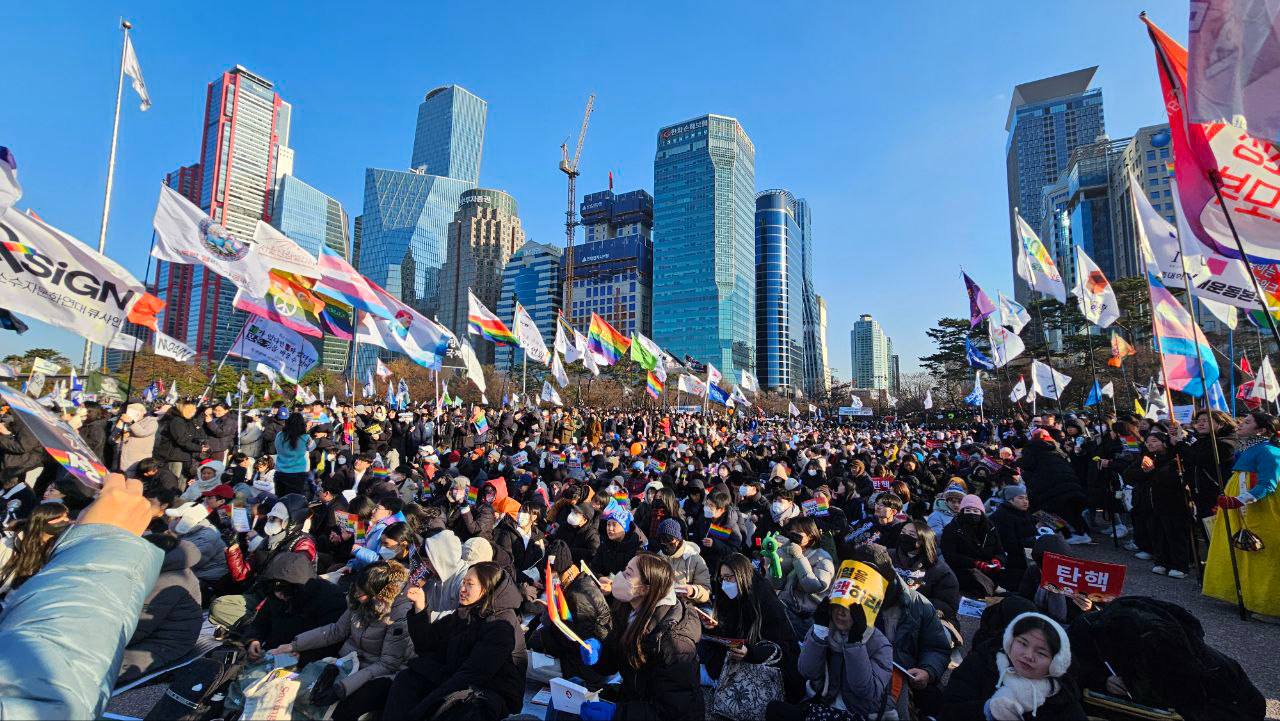
Is the square powerless? It has been a very long time since the National Assembly and the government carried the face of the square. The media and political circles shower praise on women in their 20s and 30s for “saving democracy,” but in the National Assembly itself, you can hardly see any women in their 20s and 30s. No matter who holds power, workers, sexual minorities, disabled people, migrants/refugees, and farmers—those who have been hated and repressed—are on the front lines of the struggle to oust Yoon Suk-yeol. Yet the National Assembly is already saying that until the early presidential election, it cannot deal with controversial issues—even if they are demands from the square. Can politics in this country really contain the square? Is the square’s powerlessness inevitable?
In truth, it’s not that nothing has changed. In squares that have organized rapidly, discrimination and hatred against minorities—women, sexual minorities, disabled people, migrants—are firmly prohibited. Over and over, moving speeches pour out from citizens explaining the value of solidarity. When farmers and their tractors were blocked by police violence in Namtaeryeong, people ran there without hesitation and eventually broke through the police’s “fortress.” Even in that urgent scene, several sexual minorities stood up through the night, revealing their identities and insisting that we must stand in solidarity—and that remains vivid in everyone’s memory. Among the co-chairs representing the coalition of some 1,600 organizations leading the movement to oust Yoon Suk-yeol—Emergency Action for the Immediate Resignation of Yoon Suk-yeol & Major Social Reform—there is also Lee Ho-rim, an executive committee member of Rainbow Action Against Discrimination.
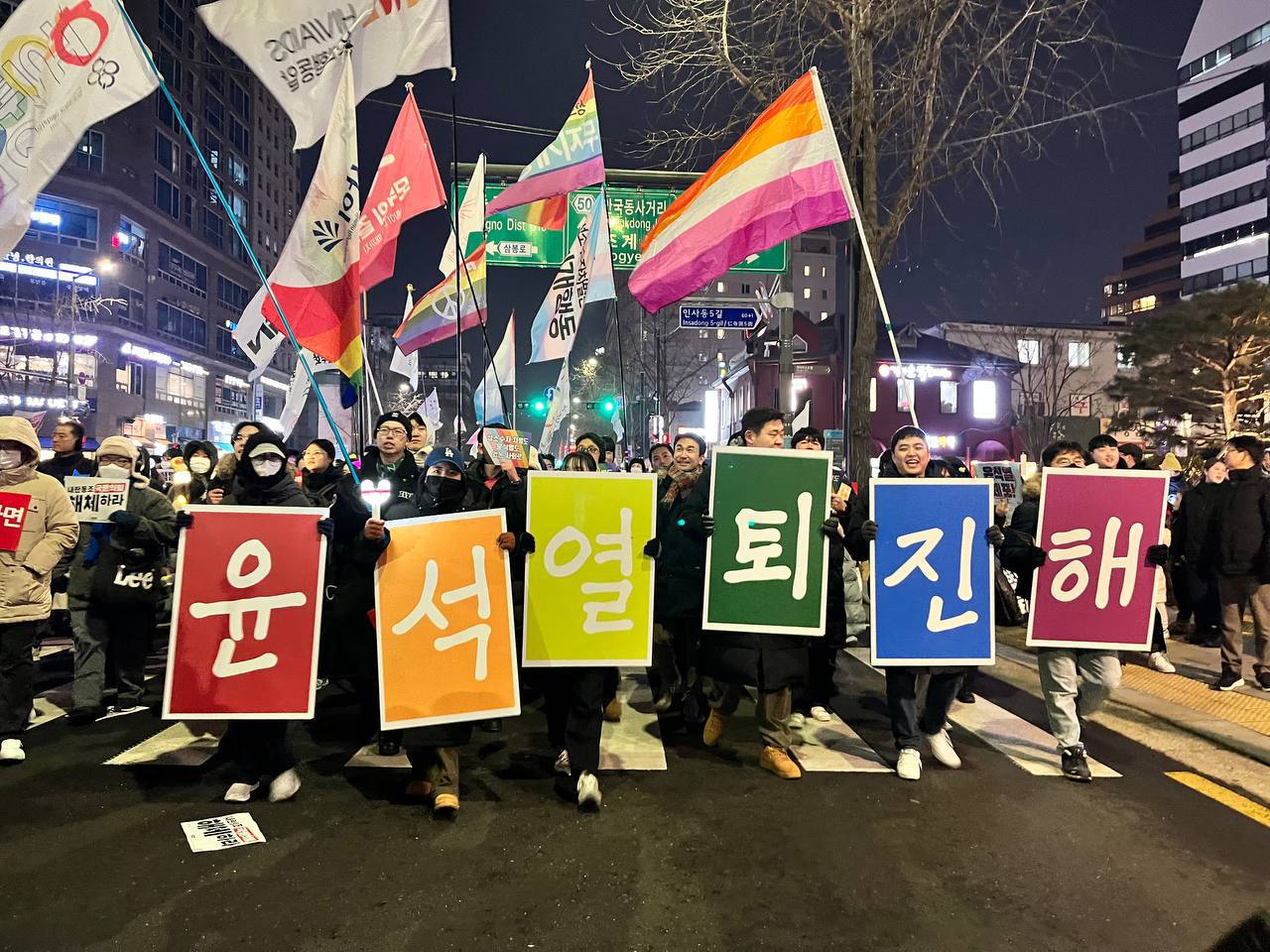
The joyful protest culture long cultivated within the LGBTQ+ movement has carried over into the rallies to oust Yoon, and the power built through years of solidarity under the name “Rainbow Action” has formed a “Rainbow Zone” bloc in the square each time. In the square, people run from far away to receive signs reading, “A society without discrimination against sexual minorities, and without Yoon Suk-yeol,” and “Sexual minorities defending democracy.” When we said we would hold our year-end gathering in the streets and the square, Chingusai members readily agreed—and marched at the very front of the rainbow bloc holding huge rainbow placards that read “Yoon Suk-yeol, resign,” and “Long live sexual minorities.” Maybe this political structure is destined to be powerless, but if we’re going to be powerless anyway, I find myself believing we can at least be “powerless in a better way.”
At the core of every moving moment of solidarity is efficacy—the feeling that our actions matter. At the after-party for the year-end gathering, member Cheolmin said he had been terrified and struggling after martial law was declared, but he was grateful and strengthened because Giyong reminded him not to forget that we are all connected. I had been constantly blaming myself for my judgment not to join immediate civic resistance, but hearing that, I finally began to think: maybe there was no single “correct” answer for what to do that day.
The fact that I had been a source of strength for someone became strength for me. If politics can’t give us any efficacy, then perhaps we can become each other’s efficacy. Instead of fearing that dialogue will be impossible with certain groups, I began to think: even so, we must talk; rather than dismissing people for not feeling the value of solidarity, we have to push our way in somehow and expand the experience of solidarity.
We are already experiencing a kind of change. It is deeply interwoven with the history of practicing how to become one another’s efficacy and building political power together. Just as reading out a pledge for an equal protest culture may feel somewhat staged, yet the habit of reading it every time has now been applied even to massive rallies.
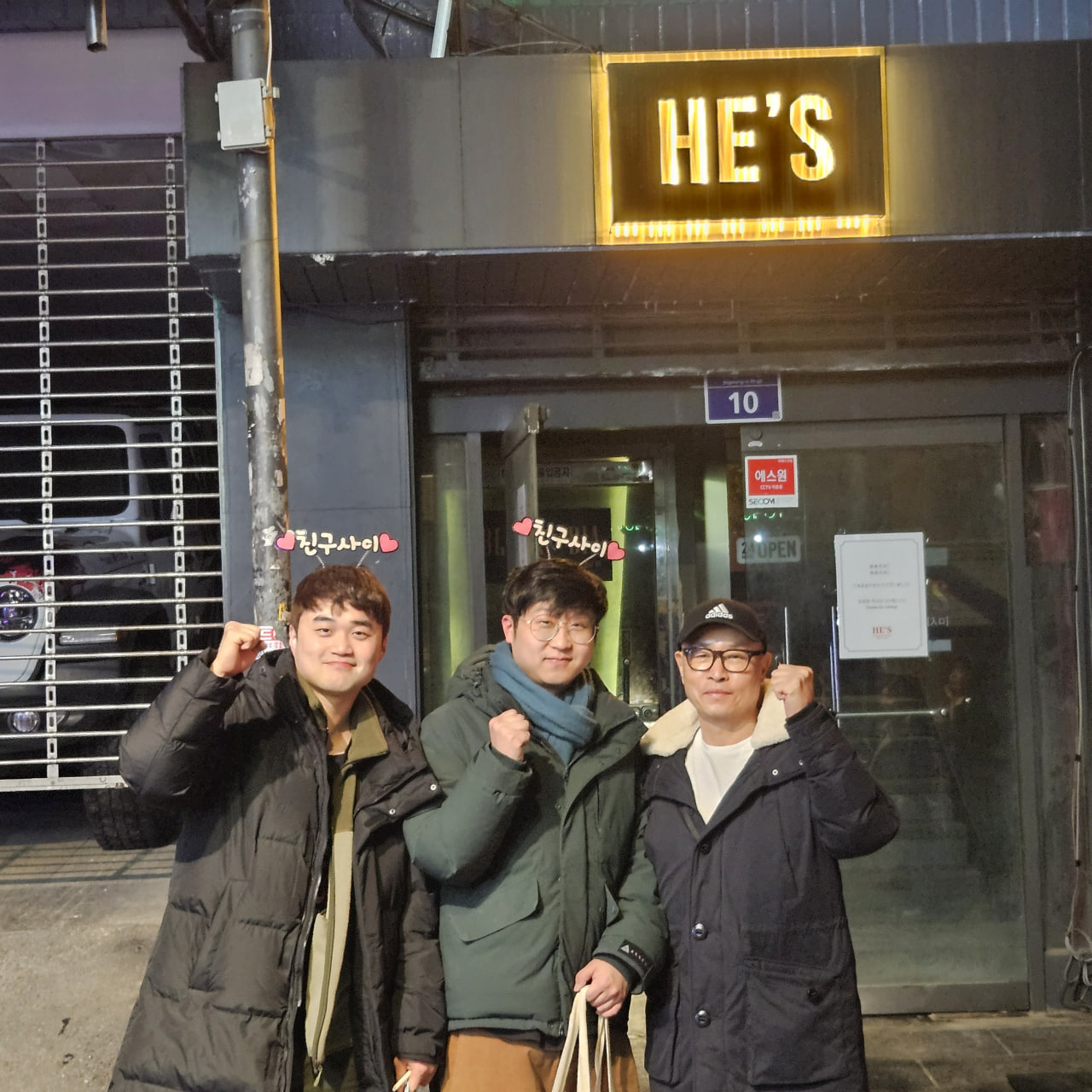
And in this moment, Chingusai moved through the gay community proposing that we try becoming a different kind of masculinity/non-masculinity, persuading community members and venue owners. Many people joined in, and it became a process of gathering hearts to oust Yoon Suk-yeol. The owner of HE’S Sauna in Itaewon called multiple times, read the materials closely, and even stepped forward to become a co-proposer. It made me feel that the strength of the ground we have built is not weak at all.
Under the rainbow flag, let us become one another’s efficacy, become one another’s courage, stop looking only toward the National Assembly and the government, renew our principles, and fight. I believe that keeping the square from being cut off from politics will come from our persistence. In the end, democracy is activated by our living vitality and our efficacy. Let’s not be defeated by the powerlessness imposed by institutions. Let’s fail better. Let’s be powerless—better.
LGBTQ+ Activist , Chingusai / Gi-yong (기용)