

Webzine
[No.168][Activity Sketch #2] <Days We Were Caught In> × Chingusai Book Talk: What Chingusai Wants to Be Caught Up In| 기간 | 1월 |
|---|
[Activity Sketch #2]
<Days We Were Caught In> × Chingusai Book Talk: What Chingusai Wants to Be Caught Up In
After the publication of <Days We Were Caught In>, a series of book talks followed. About six months later, on Wednesday evening, June 26, a long-awaited book talk was finally held with the gay human rights group Chingusai.The <Days We Were Caught In> × Chingusai book talk was organized as a space to first share questions that had emerged during two <Days We Were Caught In> reading groups held in early May; to search for points of departure for thinking about what kinds of future activities are needed so that PL (People Living with HIV infection) within Chingusai can feel a sense of belonging and live as members of the community; and to reflect on Chingusai’s accumulated considerations and reflections around its HIV/AIDS-related work. Centered on the author of <Days We Were Caught In> and panelists with lived experience in HIV human rights activism, the event was designed as a time to listen to their stories and exchange thoughts with participants.
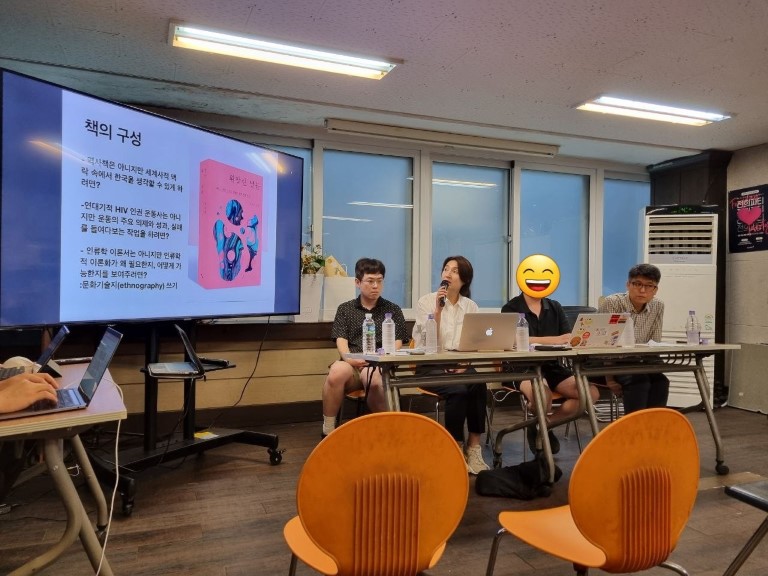
Before beginning the questions and discussion, we first heard a 20-minute talk from the author, Seo Bo-kyung, on what led her to write this book. Through <Days We Were Caught In>, she reflected on whose history HIV/AIDS in Korea belongs to, and on how people newly living with HIV today have predecessors—those who came before them and lived through particular experiences. She explained that while people may feel alone and afraid because of their current situation of living with infection, the book was written to convey that they are not alone. To this end, she included stories of gay men and women sex workers, who emerged as central figures in the early history of HIV infection in Korea. She also explained that, from a queer feminist position, she sought to bring forward the multilayered history of issues within the AIDS movement. Rather than portraying activism as charity—simply helping those who are infected—she aimed to show that activists from diverse positions and backgrounds participated together in a shared history that constitutes AIDS human rights activism itself.
Seo Bo-kyung noted that before publishing the book, she had presented its contents in the form of an academic paper. Among the critiques she received was the argument that, even if gay people today do not receive institutional recognition, they are nevertheless speaking out, making themselves visible, and actively living their lives—and that foregrounding stories of pain and hardship might instead contribute to stigmatizing them. In response, she explained that her research began from the reality of people who are both sexual minorities and living with HIV in Korea, often surviving entirely on their own, eventually growing old, becoming ill, or dying alone in institutions. When the experience of illness becomes a pathway into extreme poverty and suffering, she argued, paying attention to and examining that experience cannot be avoided; it is an essential form of queer activism in the here and now.
From this perspective, the author proposed moving away from reading infection through a binary framework of perpetrator and victim, and instead approaching “to infect” as a middle-voice concept. She explained that the book looks closely at how infection actually takes place within our bodies. Treating infection as something that can naturally and inevitably occur between people, rather than as the result of someone’s wrongdoing, makes it easier to imagine collective and community-based ways of living with infection. Infection is something that can happen to anyone, and within the histories, practices, and activities of diverse queer communities, people have already accumulated experiences of how to live alongside it. She suggested that revisiting the histories we have already been caught up in, while holding this middle-voice understanding of “to infect,” could be a meaningful practice.
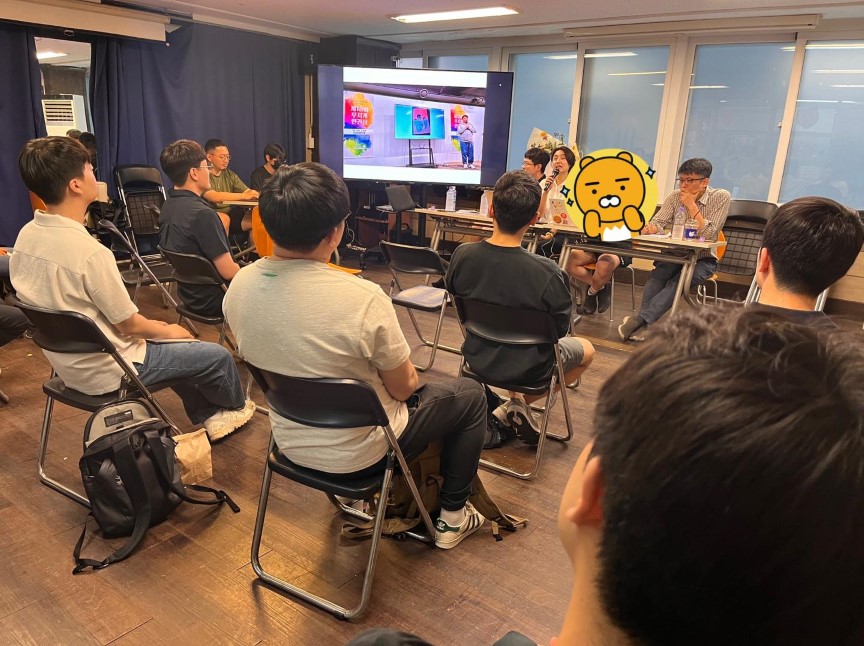
Below are several questions related to the book that were raised during the book talk, organized in a Q&A format. Some responses have been edited by combining answers from the author and participating panelists.
Q1. Many members of today’s gay community believe they sufficiently regulate themselves in order not to become infected—through condoms, PrEP, limiting relationship scopes, or specific sexual practices. However, the book states that not only sex with someone, but what one does with that person is more important, and that sexually transmitted infections signal just how extensive our sexual networks actually are. What is the context for this argument?
A1. During the height of the HIV epidemic in the 1980s, people sometimes said that having sex with one person was the same as having sex with thirty others. While this framing did serve to instill fear at the time, it was also scientifically and medically true in a literal sense. Sexual contact between bodies creates multiple and layered forms of connection. Ultimately, even with condoms or PrEP, prevention may not be perfect, and it is important to recognize that infection can occur regardless of how much control or responsibility one believes they are exercising. Sex always contains moments of contingency and chance.
Q2. The book presents vivid real cases of medical refusal. Medical professionals themselves may experience fear or anxiety about infection during treatment. In that case, wouldn’t it be necessary to expand access to pre-exposure or post-exposure prophylaxis for healthcare workers?
A2. The crucial point is not to place the burden of prevention on individuals, but to assign responsibility and roles to the state and the medical system within a broader social framework. Discrimination in medical settings arises less from individual healthcare workers than from the environments in which they work. It is therefore important to ensure that medical professionals can recognize and internalize principles of anti-discrimination through appropriate education. Of course, healthcare workers are human and experience fear and anxiety. What matters is fostering an understanding that these fears can be addressed, while also creating ways within the medical field to support shifts in professional perspectives.
Q3. The book contains extensive historical records of the AIDS movement. Chingusai has long engaged in outreach by directly visiting gay community spaces through collaborations such as iSHAP for AIDS prevention campaigns, and more recently through activities like Mind Connection. If iSHAP activities had been included in the book, how might they have been interpreted? And when documenting the history of the AIDS movement in Korea going forward, what additional aspects should be addressed?
A3. This is an important question. Before iSHAP, there was a history of state-enforced mandatory testing. iSHAP represents a significant institutional shift in that vulnerable groups such as the gay community were able to choose testing for themselves. In that sense, it is historically meaningful. However, this book chose to focus on two primary historical trajectories: the history of compulsory testing, and the stories of people living with HIV who endured state control and medical discrimination. Rather than attempting to cover the entire history of the HIV/AIDS movement, the book concentrated on these particular flows. This can be understood as space intentionally left open for future research. In subsequent work, it may be valuable to examine the histories of voluntary testing initiatives in other countries and to situate iSHAP within the conditions necessary for creating environments where voluntary HIV testing can be freely accessed.
Q4. The middle-voice concept of “to infect” does not seem easy to arrive at. It appears to be a way of thinking that would have taken considerable time to develop. Was there a particular experience that prompted this shift?
A4. This was a deeply moving question. The turning point came during the 2016–2017 UNAIDS Korea HIV/AIDS Stigma Index survey. In this study, PL interviewed other PL directly, in a peer-to-peer format. There was significant anticipation about what kinds of stories might emerge. During one interview, a participant said, “I’m sad that I became infected, but what if I infected someone else?” Encountering this statement felt crucial. Beyond being someone who is infected, there was the fear of having caused harm to another person. This raised questions about how to approach infection in a way that would allow people living with HIV to avoid internalizing blame and self-reproach, and what kinds of conceptual frameworks would be necessary to do so. It was through grappling with these questions that this line of thinking emerged.
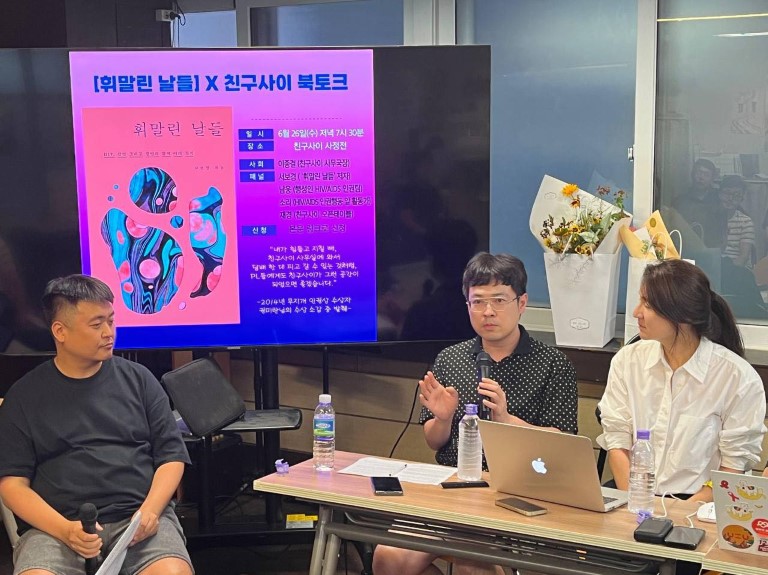
Following these exchanges, the discussion turned to Chingusai’s activities and perspectives.
Q5. The self-help group for people living with HIV, Gajin Saramdul, has been active for ten years. Yet it remains difficult to have open and meaningful conversations about infection within the gay community. Since 2019, Chingusai has hosted the Open Table series, “A Gathering to Talk About Various ___ Around HIV.” Still, it seems that substantial preparation is needed within Chingusai for PL to participate comfortably as members of the gay community. Infection status is also a matter of privacy, and one might wonder whether it needs to be disclosed at all. Drawing on the book’s perspective and the panelists’ experiences, could you share some points of departure for thinking about this?
A5-1. When HIV/AIDS Human Rights Action Al first began organizing meetings with people living with HIV over ten years ago, many participants identified as gay, yet even mentioning Jongno as a meeting location felt impossible. Simply gathering felt frightening, accompanied by fears of outing and expulsion. Looking back, it seems that each person was carrying shame individually. Over time, meetings continued in Jongno, community events were held, and going to gay bars became less frightening. People began asking each other whether they had taken their medication, openly taking pills in front of one another. These gradual changes have continued to this day. If we reconsider what shame is, the issue is not being sexually active or having sex without condoms, but whether community members can accept that some of us are living caught up in infection—and have been for a long time.
A5-2. From the perspective of someone involved in organizing the Open Table series, it still feels that perceptions of PL within the gay community have not changed significantly. At first, the question was why nothing seemed to change, even though information was widely available. That was why Open Table focused heavily on talking about PL. Rather than forcing conclusions, the process aimed to support participants in working through conversations on their own. One recurring question invited participants to imagine what it would feel like if they themselves became PL. Their responses often mirrored the process they had gone through when recognizing themselves as gay: fear of being blamed, concern about rumors, and the sense that, despite having lived diligently, becoming infected would suddenly make life deeply uncomfortable. To shift these perceptions, it may be necessary to approach them not only as individual emotions, but by attending to others’ feelings as well. Whether this can be resolved through education alone, or whether Chingusai’s activities need to foster a stronger sense of belonging, remains an open question.
A5-3. The activities of Gajin Saramdul and the Open Table gatherings are, in my view, deeply important within Chingusai’s work. I once attended a report-back session from an Open Table program, and it was deeply painful to hear that PL who were participating as Open Table leaders felt a strong sense of humiliation in response to participants’ excessively candid remarks. First, we need to recognize clearly that we are living within dynamics of power. Within the gay community, people living with HIV are often positioned as contaminated or expelled beings. When someone has sex or enters into a relationship with them—whether without knowing their HIV status, or even while knowing it—there is a tendency for the uninfected party to exaggerate their own minor discomfort. This exaggeration functions as a way of asserting a superior position, as if they have suffered greater harm than those who have actually experienced social exclusion and discrimination as a result of infection. So who is truly struggling more—the infected, or the uninfected? Despite the fact that people living with HIV clearly bear the heavier burden, we repeatedly encounter situations in which individuals invoke criminal provisions on acts facilitating the transmission of infectious diseases in order to overstate their own victimhood and actively claim the position of the harmed. Lesbian documentary filmmaker Sarah Schulman describes these power dynamics through the guideline “THINK TWICE.” Are you really as harmed as you believe? Is someone’s nondisclosure of their HIV status truly that destabilizing?
A5-4. As an organization that hosts collective gatherings and activities, Chingusai includes a self-help group like Gajin Saramdul, where members experience stability and intimacy. At the same time, some members may wish to participate in various Chingusai activities without having to consciously identify as PL. Not all members may want to attend Chingusai events; some may want to participate without disclosing their status; others may feel more comfortable being open, receiving support, and engaging with the productive tension that comes with visibility. Creating a diversity of spaces seems essential. Even informal gatherings can offer strength through connection. Perhaps, at times, these spaces might intersect. Ultimately, the hope is that, when asked about their affiliation at a larger gathering, someone could comfortably say, “I’m part of Gajin Saramdul.”
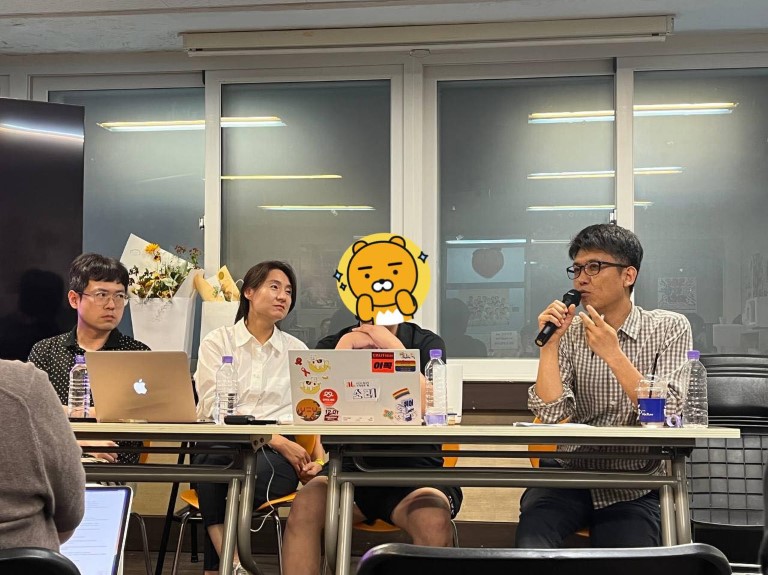
For over two hours, questions and perspectives flowed without pause. While this reflection cannot capture everything that took place, it was clearly a space where panelists and participants spoke candidly about their concerns and thoughts. One participant shared that, during an Open Table session, they had spoken very frankly, voicing raw sentiments from within the community. After hearing the Open Table leaders speak that day, they wondered whether they should have been more careful with their words. At the same time, they reflected on how openly saying phrases like “promiscuous sex” had also been part of what made those conversations possible. Within a community like Chingusai, composed of people with widely different experiences, they suggested that living with a certain degree of discomfort may simply be part of reality.
Another panelist shared that as we age, our bodies ache more and our worries grow. There was a time when carefully establishing boundaries felt most important, but now they were experiencing how “you” are necessary for defining “me.” Rather than understanding oneself solely as an individual, it is through others that one comes to know who one is. They suggested that if our community shared more of these experiences, we might come closer to becoming queer together. This echoed the final chapter of <Days We Were Caught In>, “The Future of HIV and AIDS.” It was a meaningful book talk that reaffirmed the ongoing need for collective practice in becoming queer—and for Chingusai to become more deeply caught up with one another.
Secretary-General, Chingusai / Jong-geol (종걸)