

Webzine
[Cover Story “G-Code” #2] Announcing the Birth of Korea’s Circuit Party — The Making of “I AM”| 기간 | 1월 |
|---|
[Cover Story “G-Code” #2]
Announcing the Birth of Korea’s Circuit Party
— The Making of “I AM”
Figure 1. Official logo of I AM
#1> What Is a Circuit Party?
A circuit party refers to a large-scale festival where gay men gather over several days to enjoy a wide range of events, including DJ dance parties, drag and macho shows, and pool parties. The word circuit carries connotations of being “boundary-less” and “unrestricted,” a term that captures the event’s defining feature: gay people freely mingling and celebrating together. Overseas, the term has long been familiar. In recent years, rather than explicitly using the word circuit, many events have adopted unique brand names—much like contemporary music festivals—reflecting a broader trend toward branding.
“Shouting our existence to the world.”
If you have ever enjoyed dance clubs in Itaewon, circuit parties may appear similar at first glance. However, these events differ significantly in both scale and sociocultural impact. Circuit parties bring together people across generations, social backgrounds, age groups, and even national borders, all at once. In other words, the scale of interaction and the issues generated by people gathering in one place are fundamentally different.
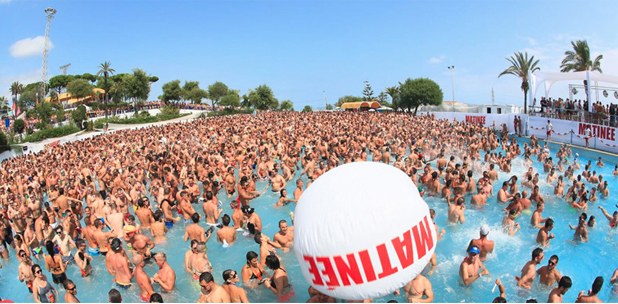
Figure 2. Europe’s flagship circuit party, Circuit Festival (http://www.circuitfestival.net), organized by the professional event company Matinée Group (http://www.matineegroup.com), is regarded as the largest circuit party in the world in both history and scale. This year, it took place from August 5 to 16 in Barcelona, followed by events from August 19 to 23 in Ibiza, an island famously known as a global party destination. The festival is held every summer.
While gay people have long been known for enjoying music and dance, making the emergence of such parties seem almost inevitable, there are multiple theories regarding the origins of circuit parties. Tracing their roots, however, most accounts point to disco parties in major U.S. cities—particularly New York—in the 1970s.
The form we recognize today began to take shape in the early 1980s. This was a period when the emergence of AIDS plunged gay communities into fear and despair. Large-scale gatherings organized to overcome this collective trauma are widely regarded as the origins of circuit parties. The film The Normal Heart (2014) vividly captures the atmosphere of that era.
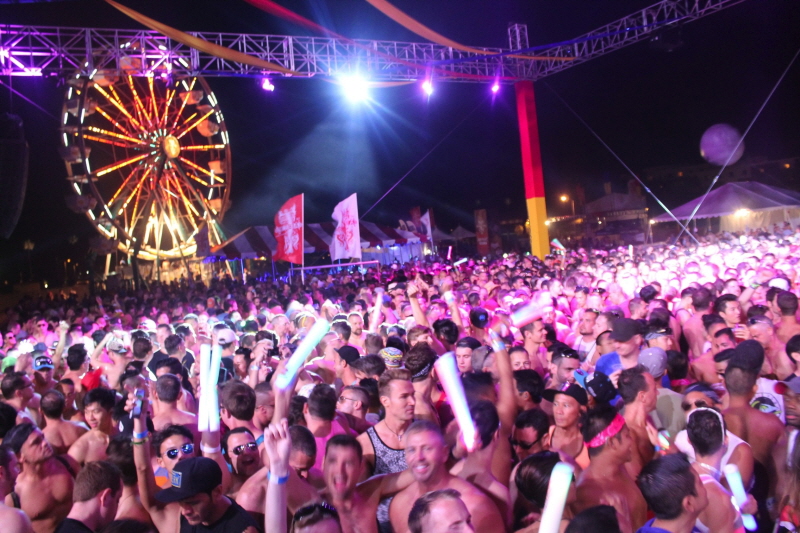
Figure 3. In the United States, there is The White Party Palm Springs (WPPS, http://www.jeffreysanker.com), widely known as the largest gay dance festival in the world, created by renowned gay party promoter Jeffrey Sanker. In 2015, the festival was held over four days, from April 24 to 27, and it takes place every spring in Palm Springs.
Circuit parties typically take place in venues capable of accommodating massive crowds—large clubs, gymnasiums, or public plazas—lavishly decorated with lighting, installations, and music. Attendance usually ranges from around 1,000 to as many as 20,000 people. Participants span from their 20s to their 60s, including couples and singles alike, arriving from all over the country—and often from around the world.
“Hanging out together as gays, celebrating gay life!”
Circuit parties are usually held during holidays or vacation seasons. The reason is simple: to celebrate and enjoy “gay life” and “gay pride.” They are also a way to affirm sexual identity, claim desired freedoms, and showcase the solidarity and power of the gay community.
Does the precise meaning really matter? Wouldn’t you want to enjoy a circuit party in the city—just as you might attend one of the many large-scale summer music festivals held domestically?
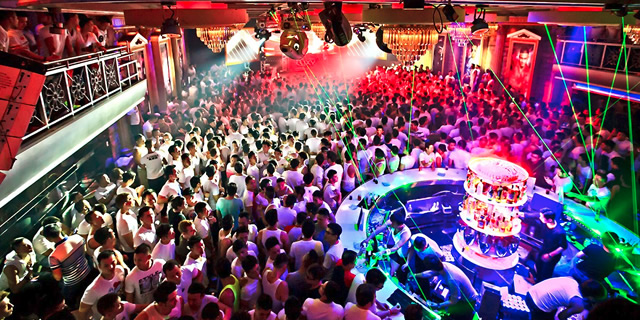
Figure 4. Mega G5 Taipei New Year Festival (http://www.g5-taipei.com), held in Taiwan from January 1 to 4, 2015, is Asia’s largest circuit party, first launched in 2001 and held annually to welcome the New Year. Under the G5 name, the organizers also host a variety of parties throughout the year.
#2> Circuit Parties Attempted in Korea
Now that we know what a circuit party is, the natural question arises: what about Korea? Am I the only one curious?
Various circuit party attempts have indeed taken place in Korea. In 2007, party planner Jimmy Kim—along with several well-known, party-loving gay unnis—imported a Taiwanese gay circuit party under the title Blue Party and held it locally. Despite extensive searching in both Korean and English, I was unable to find detailed records of the event. Anyone with information is encouraged to share.
“The beginning of Korean circuit parties?!”
While the exact background remains unclear, the event unfolded over three days: Friday at Tribeca in Cheongdam-dong; Saturday at the gay club Del Disco in the basement of the Hamilton Hotel in Itaewon; and Sunday with a pool party at the Hamilton Hotel followed by an after-party at Pulse. At Tribeca, Taiwanese go-go boys performed flamboyant shows—spinning red Japanese-style umbrellas atop pillars scattered across the dance floor while flower petals rained down. Numerous celebrities and (male!!) models added to the spectacle. (Rumor had it that every “closeted” gay celebrity showed up that night…)
“A gay concept party!”
While the second and third nights were indeed parties where gays gathered to enjoy themselves together, one lingering question remains: can it truly be called a circuit party? At the time, the events were largely driven by Cheongdam-dong fashion insiders as a “gay concept” party. Of course, many Korean gay unnis who had tasted foreign club culture eagerly bought expensive tickets and joined in. Given the era—when concept parties sponsored by fashion brands were rampant—it may have been possible for such gay-themed events to exist.
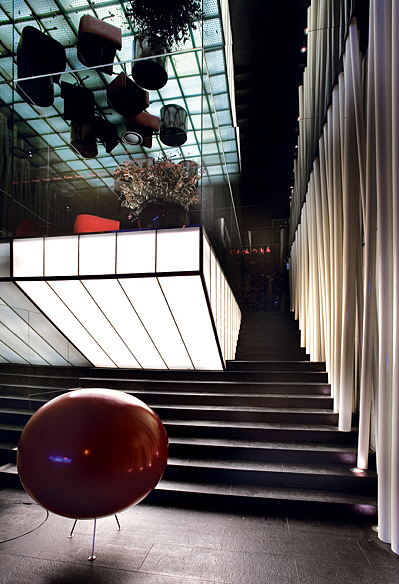
Figure 5. Tribeca, a party-exclusive venue in Cheongdam-dong at the time.
Compared to those born in the 1960s and 70s—when clubbing was a new trend and overseas travel was rare—gay people born in the 1980s and later naturally grew up immersed in club, party, and festival culture. (The beneficiaries of cultural privilege!) After spending their 20s partying, this generation eventually gave rise to branded parties in Korea.
“The growth of gays enjoying new culture”
For circuit parties, nothing is more important than a name that clearly conveys the party’s concept. Around 2010, various gay-branded concept parties began to appear consistently. This was partly due to competition: Itaewon’s gay club scene expanded from a near-monopoly to a stable multi-club ecosystem, pushing venues to create more engaging events. As these parties accumulated, Korea finally saw the birth of a homegrown circuit party—one that openly claimed large-scale ambition.
#3> I AM: Korea’s Representative Circuit Festival
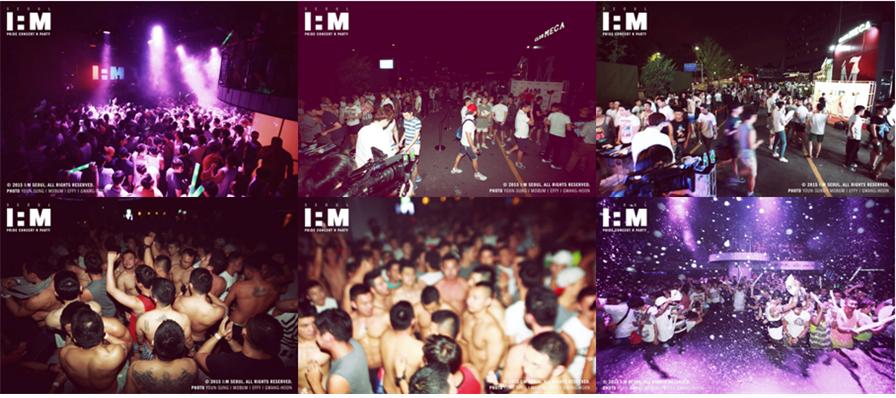
Figure 6. Best moments of I AM 2015
From August 21 to 23, 2015, six parties were held over three days, following daily color themes of red, white, and blue. The main party took place at Club MECCA in the Crown Hotel, Itaewon. After-parties rotated among Gray (Friday), Pulse (Saturday), and Le Queen (Sunday), with a pool party held Sunday evening at the Hamilton Hotel. I attended every event for filming, and I was struck by many thoughts: There are so many gays in Korea. We can really come out and party like this. Everyone is handsome. And wow—people have incredible stamina.
As the official title—“I AM [concert + circuit party in SEOUL]”—suggests, the event aimed to combine concerts with a circuit party format, creating a uniquely Korean stage unlike any other circuit party abroad. Performances included K-pop girl group Dal Shabet, Gain, renowned transgender and drag queen shows from Itaewon, laser performances by PID (Performance in the Darkness), go-go boy shows featuring domestic and international performers, and sets by 15 well-known gay DJs from Korea and abroad.
* For more detailed information about the party, please refer to the links below.
Official website: http://www.iamseoul.com
Official Facebook page: https://www.facebook.com/iam.concert.circuit
“The power of a gay network made up of professionals across fields”
This party was also remarkable for the sheer diversity of professionals in attendance. In the past, organizing anything within the gay community often stumbled due to a lack of experts. Now, however, a strong network of openly active professionals across many fields has formed—becoming a driving force in expanding the foundation of gay culture in Korea. Witnessing this was deeply moving.
Finally, I’m sharing the official I AM aftermovie that I produced. It captures both the atmosphere of the three-day party and stories from the preparation process.
I AM official after movie
* This article has been reorganized and edited based on a post previously published on Ijjok Saramdeul.
Producer, Ijjok Saramdeul / Lee Seung-jun (이승준)